How to Get Around The Dolomites
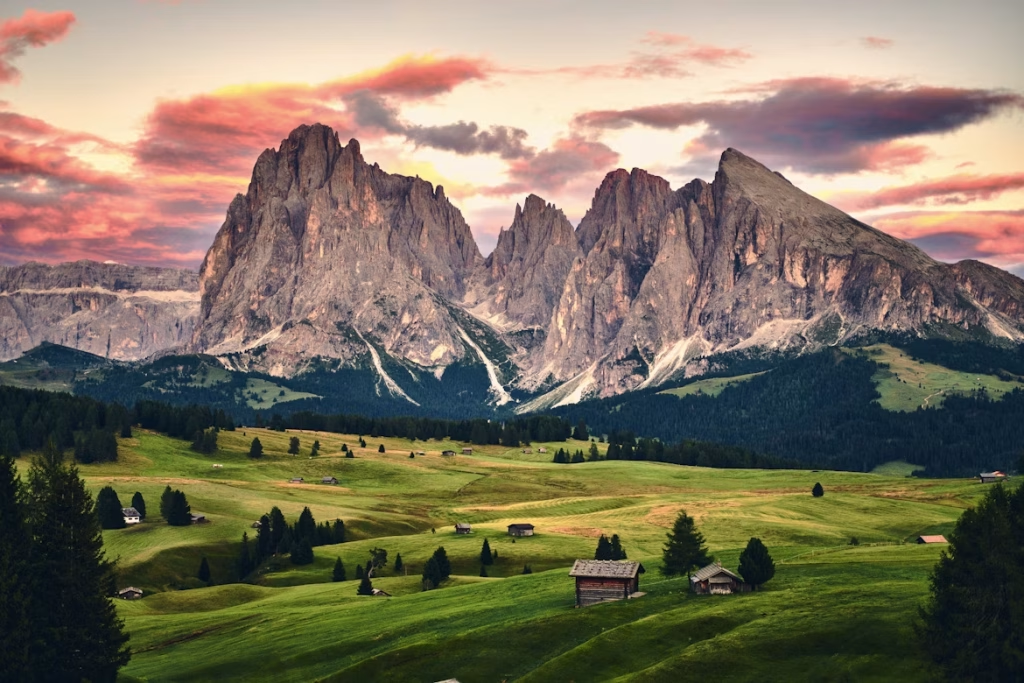
If you are planning a trip to the Dolomites, one of the most important practical questions is how to get around the Dolomites efficiently without wasting precious time on complicated transfers or unexpected road issues. The region offers several transportation options, but the best solution depends on your itinerary, travel style, season, and budget. Getting around the Dolomites is not difficult, but it requires realistic expectations and thoughtful planning.
The Dolomites reward travelers who prepare well. Without preparation, short distances can become long travel days, and a beautiful alpine escape can turn into a logistical puzzle.
The Geography and Why Logistics Work the Way They Do
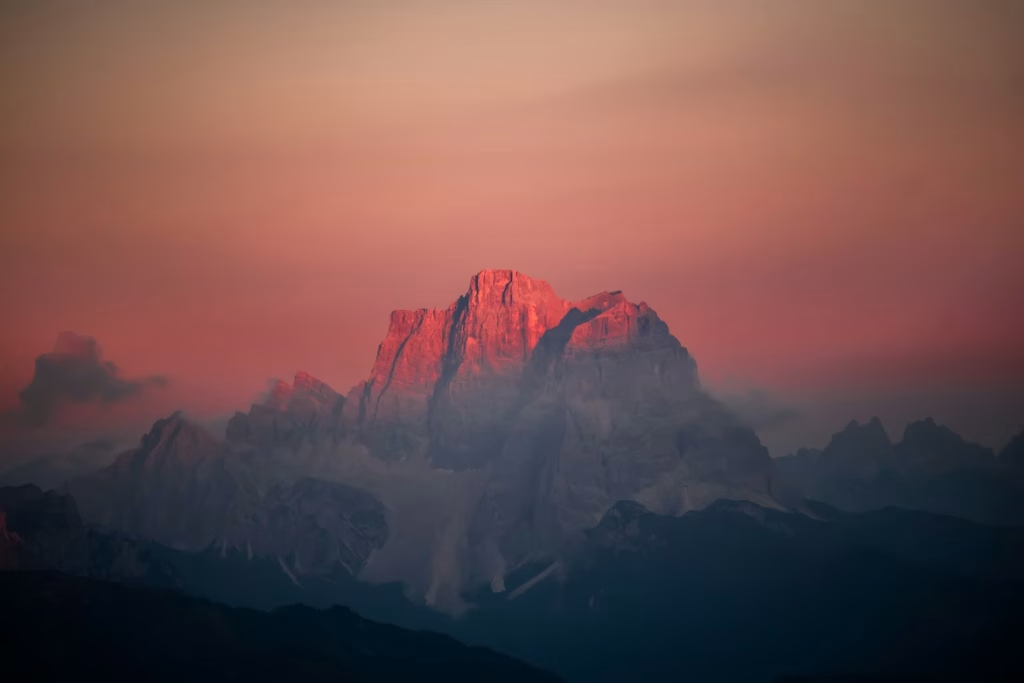
The Dolomites are a mountain range in northeastern Italy, spanning South Tyrol, Trentino, and Belluno. Part of the Italian Alps and a UNESCO World Heritage Site, this is a wide alpine region shaped by deep valleys, high passes, and protected parks rather than a compact destination.
Distances can be misleading. A 40-kilometer drive may take over an hour due to winding roads and elevation changes, and moving between valleys often means crossing mountain passes. Although towns appear close on the map, connections are not always direct. Public transport is less frequent at higher elevations and strongly affected by seasonality, with reduced services in late autumn and early spring. Understanding this geography is essential for planning how to get around the Dolomites without frustration.
Comparing Ways of Getting Around the Dolomites
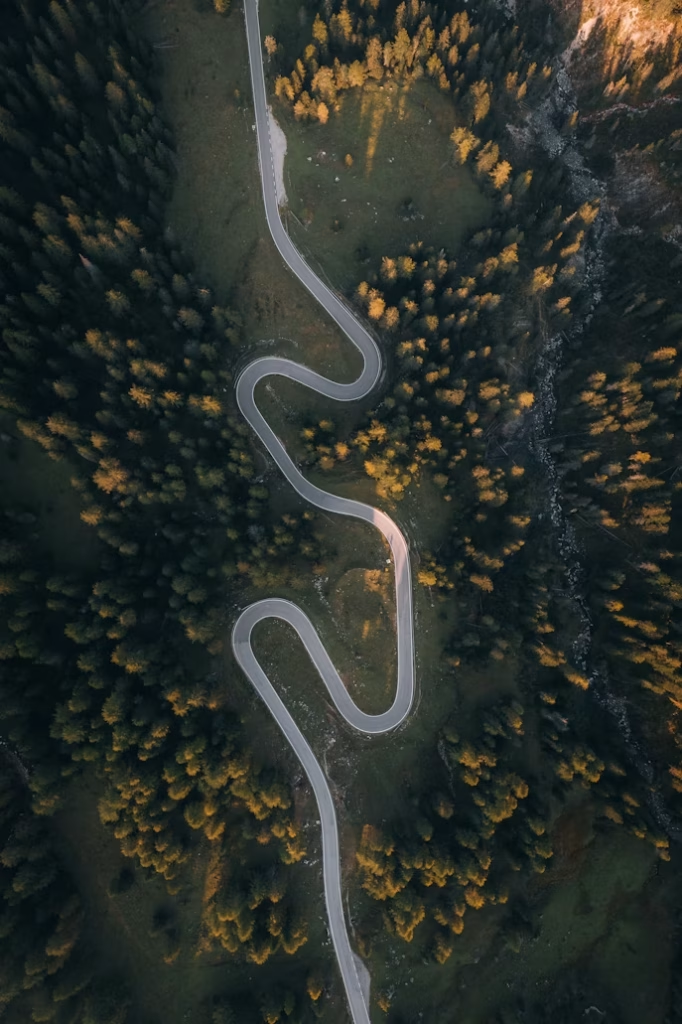
Before going into deeper explanations, it helps to see a structured overview of transport options. Each method works well in specific situations, and knowing when to use which option can save both time and money.
Flights to the Region
There is no airport inside the Dolomites themselves. The mountains are reached via nearby international airports such as Venice, Verona, Milan, or Innsbruck. From there, travelers continue by train, bus, or rental car. Flying is therefore not about moving inside the region but about reaching northern Italy quickly.
Flights make sense when you are arriving from another country, when you are combining the Dolomites with cities like Venice or Milan, or when you have limited time and need the fastest possible arrival. They offer quick access from major European hubs and often competitive fares thanks to low-cost carriers. At the same time, flying requires an additional land transfer and offers little flexibility once you reach remote mountain villages.
- When it fits: international arrivals, short trips, city + mountains combination
- Advantages: fast arrival, competitive fares, strong international connectivity
- Disadvantages: no airport in the mountains, mandatory transfer, limited flexibility in rural areas
Trains
Railways connect major cities with gateway towns such as Bolzano, Bressanone, and Brunico. Train travel into the Dolomites is comfortable and scenic, particularly along the Brenner corridor. However, trains do not reach high-altitude villages or small alpine valleys directly. From railway stations, buses handle the final ascent.
Trains are ideal if you plan to stay in one valley and avoid driving in mountain terrain. They operate year-round and generally follow stable schedules. The main limitation is that evening departures are limited, and traveling between valleys often requires returning to a central rail hub before heading elsewhere.
- When it fits: staying in one valley, avoiding driving, arriving from Venice/Verona/Innsbruck
- Advantages: reliable schedules, comfort, scenic routes
- Disadvantages: requires bus transfers, limited late departures, inefficient for multi-valley trips
Regional and Intercity Buses
Buses are the backbone of public transport within the Dolomites. They connect railway stations to alpine villages, hiking hubs, and smaller communities that trains do not reach. In South Tyrol especially, the system is well integrated, and transfers between trains and buses are usually coordinated.
Buses are practical when you are traveling without a car and staying within one region. They allow structured day hikes from a fixed base. However, frequency drops in the evening, some routes operate only seasonally, and popular summer lines can become crowded.
- When it fits: car-free travel, single-region stays, day hikes from one base
- Advantages: affordable, broad village coverage, coordinated connections in some provinces
- Disadvantages: reduced evening service, seasonal adjustments, peak-season crowding
Rental Car
For many visitors researching how to get around the Dolomites, renting a car provides the highest level of flexibility. It allows you to move between valleys without complex transfers, reach trailheads early in the morning, and adapt plans according to weather.
A car is especially useful for short trips where time efficiency matters, for exploring multiple valleys, or when traveling with children or heavy equipment. The tradeoff is cost, seasonal parking pressure, and the need to be comfortable with mountain driving conditions.
- When it fits: short stays, multi-valley itineraries, family travel
- Advantages: schedule independence, direct access to remote locations, efficient routing
- Disadvantages: parking competition in summer, attention required on mountain roads, higher overall expense
Taxi Services and Ride Applications
Taxi services operate in larger towns, but availability becomes limited in smaller alpine villages. Standard ride-hailing apps are inconsistent outside urban centers. Taxis are most useful for airport transfers, late-night arrivals, or short point-to-point journeys when public transport schedules do not align.
They offer door-to-door convenience and remove parking concerns, but they are significantly more expensive than buses or trains and impractical for daily sightseeing across multiple valleys.
- When it fits: airport transfers, late arrivals, short direct trips
- Advantages: door-to-door service, no parking issues
- Disadvantages: high cost, limited rural availability, not suitable for daily touring
Organized Tours and Private Transfers
Day tours from Venice or other nearby cities provide a structured way to see the Dolomites without managing logistics. These tours typically operate on fixed routes and timetables, focusing on scenic stops rather than in-depth exploration.
They are suitable when you only have one day, prefer guided experiences, or do not want to coordinate trains, buses, and lifts yourself. While convenient, they reduce flexibility and can be more expensive on a per-day basis.
- When it fits: one-day visits, guided experiences, no independent planning
- Advantages: minimal preparation required, local insights included, time-efficient
- Disadvantages: fixed schedule, less autonomy, higher cost per day
Cable Cars and Mountain Shuttles
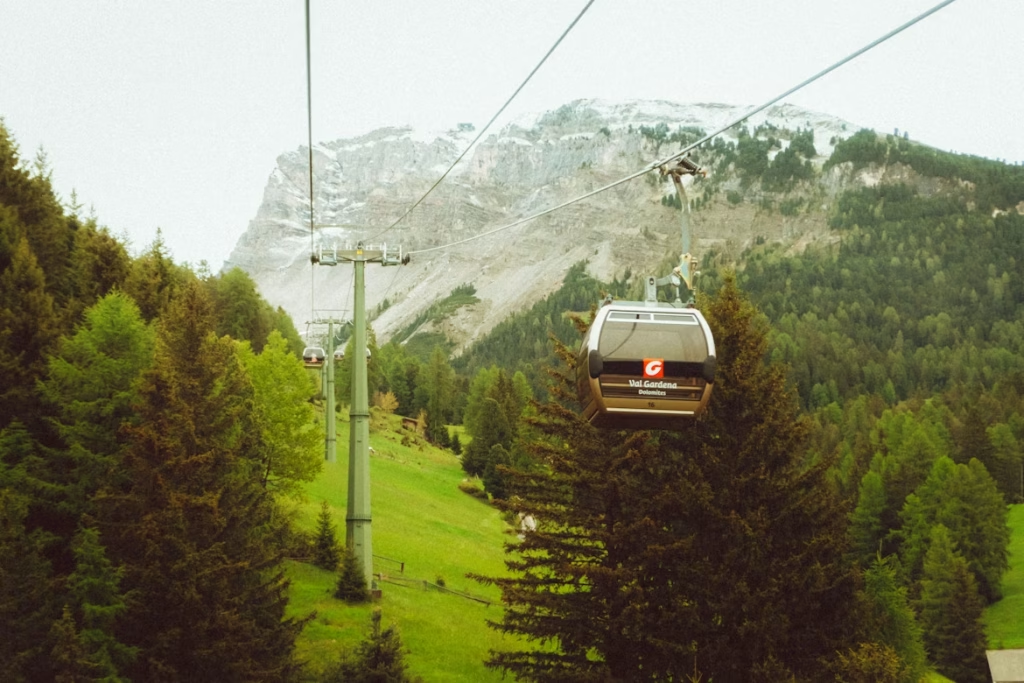
In a mountain region like the Dolomites, lifts are part of the transport infrastructure rather than optional attractions. Cable cars connect valley floors with high-altitude plateaus, hiking networks, and ski areas. Seasonal shuttle buses often link parking areas with protected zones where private cars are restricted.
They are essential for high alpine hiking, winter ski access, and avoiding steep access roads. However, they operate on strict schedules, depend on weather conditions, and often close during shoulder seasons.
- When it fits: high-altitude hikes, ski season access, avoiding restricted roads
- Advantages: saves time and physical effort, reduces congestion, panoramic views
- Disadvantages: weather-dependent, fixed operating hours, seasonal closures
Renting a Car: What You Really Need to Know
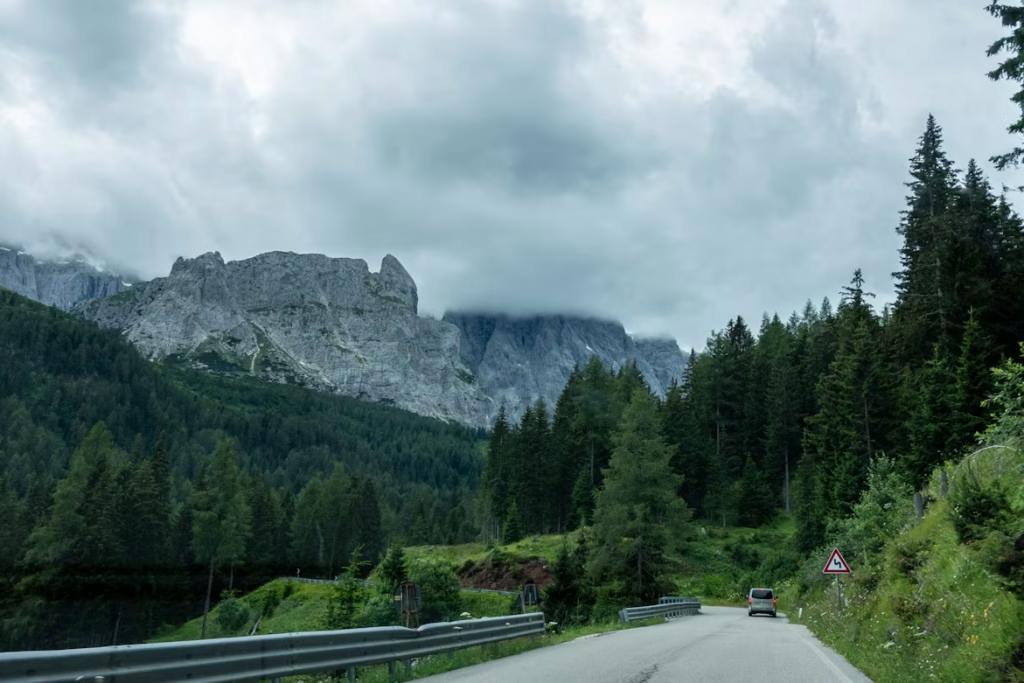
Many visitors assume driving in the Dolomites is complicated, but roads are well maintained and clearly marked. The real question is whether a car makes sense for your itinerary.
A car is especially useful if you plan to explore multiple valleys in a short time. For example, traveling from Val Gardena to Cortina d’Ampezzo by public transport can take several hours with connections, while by car it may take roughly half as long. However, if you stay in one base and choose hikes accessible by lift or bus, public transport can be sufficient.
License and Age Requirements
For car rental in Italy:
- EU driving licenses are valid
- Non-EU travelers may need an International Driving Permit
- Minimum age is usually 21
- Some vehicle categories require drivers to be 23 or older
A credit card in the driver’s name is normally required for the security deposit.
Insurance and Deposits Explained Simply
Basic insurance is included in rental rates. However, the excess amount can be significant. Reducing or eliminating the excess through additional coverage is often worth considering, especially in mountain terrain where narrow roads and tight parking are common.
Always check:
- Excess amount
- Fuel policy
- Tire coverage
- Glass and undercarriage protection
Parking, Traffic Zones, and Road Conditions
Parking is available throughout the Dolomites but fills quickly in summer, especially at places like Lago di Braies and major lift stations. Some areas require advance reservation, and historic town centers often have ZTL restricted zones where unauthorized entry leads to fines.
Highways from Venice or Milan are toll roads. Mountain passes are paved and safe, but winter conditions require snow tires or chains, and automatic transmission is recommended for steep alpine driving.
Choosing the Right Vehicle
The right car depends on season and group size.
- Compact cars are practical for couples and easier to park
- Station wagons suit families with luggage
- SUVs are helpful in winter conditions
- Automatic transmission simplifies mountain driving
Manual cars are common in Italy, so automatic models should be booked in advance.
Public Transport: How to Minimize Problems and Save Time
If you are serious about getting around the Dolomites without renting a car, you need to approach public transport strategically rather than casually. The system works, but it works best when you build your itinerary around it instead of trying to adapt it last minute.
The first thing to understand is that public transport in the Dolomites is regional. South Tyrol has one of the most efficient alpine transport networks in Italy, while other provinces may have slightly different ticket systems and schedules. Trains connect major corridors, but buses handle the final ascent into mountain villages.
Public transport is realistic when you choose one or two bases and explore from there. It becomes inefficient if you change accommodation every night across different valleys.
What Transport Actually Exists and How Convenient It Is
In practical terms, you can rely on:
- Regional trains connecting gateway towns such as Bolzano, Bressanone, and Brunico
- Valley buses linking train stations to alpine villages
- Seasonal hiking shuttles to trailheads
- Cable cars and gondolas to high-altitude plateaus
- Ski buses during winter season
Within South Tyrol, integration between buses and trains is strong. Timetables are coordinated and transfers are usually smooth. In Belluno province and areas around Cortina d’Ampezzo, connections exist but may require more attention to timing.
Convenience depends heavily on time of day. Morning services are frequent. Late evening options are limited. Sundays can have reduced frequency, especially outside peak summer and winter.
If you miss a connection, the next one might not come for another hour.
Buying Tickets: Online, Machines, Counters, Apps
Ticket purchasing is straightforward but varies slightly by region. Regional tickets can often be purchased at:
- Train station ticket machines
- Counters at larger stations
- Bus station kiosks
- Official regional transport apps
- Onboard from drivers in some cases
Buying online in advance is rarely necessary for regional buses. For trains, purchasing shortly before departure is sufficient. However, long-distance trains from Venice or Milan should be booked earlier during peak season.
In South Tyrol, integrated day passes can offer good value if you plan multiple rides in a single day. These passes cover buses, regional trains, and sometimes cable cars within specific zones.
Transport Passes and When They Make Sense
Regional passes are useful when:
- You take several bus rides per day
- You combine train and bus in one day
- You stay within one province
They are less useful when:
- You travel only short distances
- You change provinces frequently
- You rely mostly on hiking lifts
Always calculate roughly how many rides you expect per day before purchasing a multi-day pass.
Common Limitations You Should Plan Around
Public transport in mountain regions has constraints that are easy to underestimate. Evening schedules are limited. Some routes run only in summer hiking season or winter ski season. During shoulder months, lifts may close for maintenance.
Transfers between valleys can require descending to a central station before heading back up another valley. What looks like a 30-minute drive might become a two-hour bus journey with a change.
When planning how to get around the Dolomites without a car, always check:
- Last bus departure time
- Sunday and holiday schedules
- Seasonal operation dates
- Weather-related disruptions
Building a buffer of at least 30 to 45 minutes between connections is wise.
Mountain Regions and Seasonality
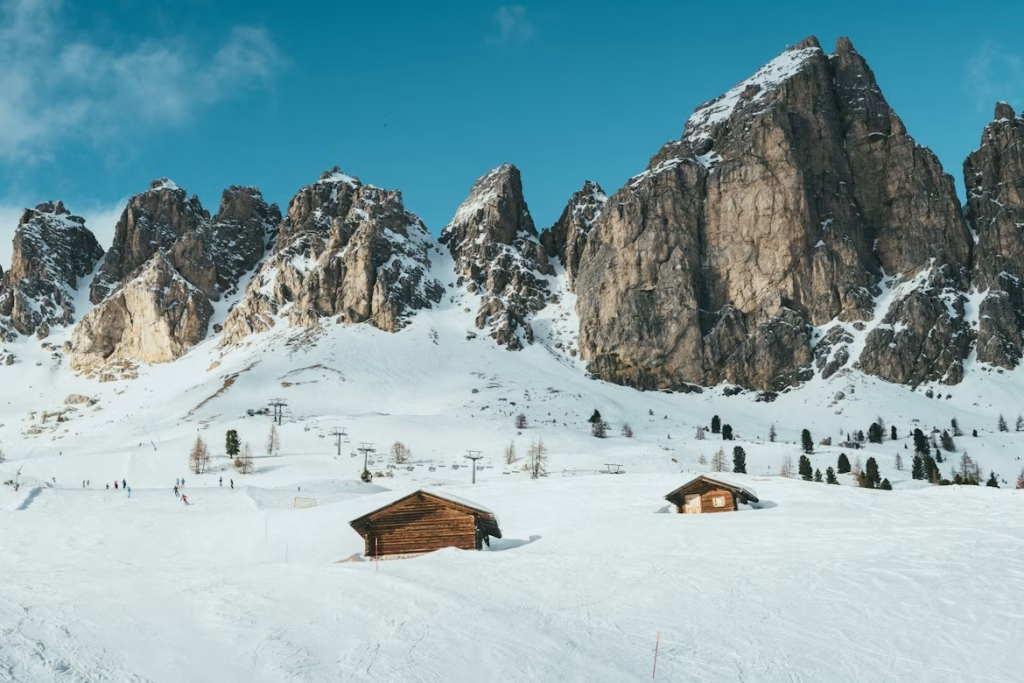
Seasonality is one of the most underestimated factors when planning transport in the Dolomites. The region has two main operating periods: summer hiking season and winter ski season. Between them, many lifts and some services close for maintenance.
Cable cars usually run from late May or June to early October, then reopen in December for ski season. In April and November, entire lift systems may be closed. Mountain roads can also be affected by snow in early spring or late autumn, and some high passes may temporarily close after heavy snowfall even in May or October.
Always verify:
- Lift opening dates
- Mountain hut operating periods
- Shuttle bus start and end dates
- Weather forecasts before crossing high passes
Checking official transport websites and local tourism offices shortly before travel is essential. Schedules published months in advance can still change due to weather.
Useful Apps and What to Check Before Departure
Technology significantly simplifies how to get around the Dolomites today. However, using official sources is more reliable than relying solely on generic map applications.
For navigation:
- Google Maps for driving and walking
- Offline maps for remote hiking areas
For transport schedules:
- Regional transport apps such as South Tyrol’s mobility app
- Italian railway apps for train tickets
For lift operations:
- Official websites of ski resorts and cable car operators
Before departure, always verify:
- Lift opening dates
- Bus seasonal schedules
- Weather forecast for mountain passes
- Road conditions if driving in winter
Tourism offices in each valley publish up-to-date information on closures and seasonal changes. Checking these official sources a few days before arrival prevents unpleasant surprises.
Scenario 1: Short Trip, 3 to 4 Days, Maximum Highlights
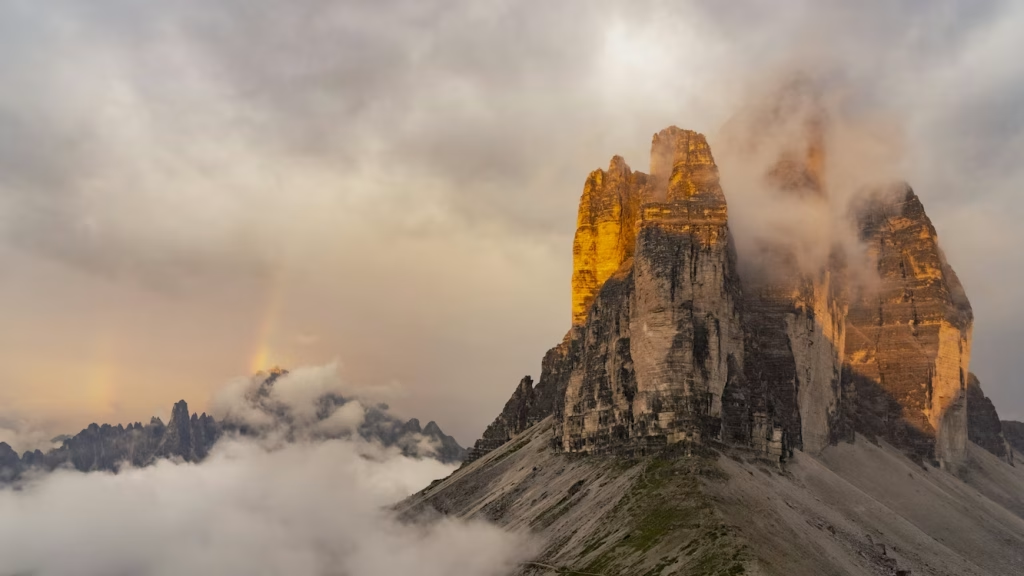
This format works best if you want to see the most iconic locations in a very limited timeframe. The idea is simple: minimize transfers and use one base, either in Val Gardena or Cortina d’Ampezzo, then take structured day trips to key spots like Tre Cime, Lago di Braies, and Seceda.
The most efficient solution is renting a car at Venice or Verona airport and driving directly into the mountains.
Time on the road:
- Venice to Val Gardena: ~3-3.5 hours
- Venice to Cortina d’Ampezzo: ~2.5-3 hours
- Daily drives between highlights: 1-3 hours
Transport costs:
- Car rental: €45-€100 per day (depending on season)
- Fuel for 3-4 days: €60-€100
- Motorway tolls (round trip): €40-€60
- Tre Cime toll road: ~€30 per car
- Seceda cable car: €35-€52
Car rental and fuel are the largest expenses in this setup. To reduce costs, book the car early and avoid relocating between valleys. Without a car, this scenario becomes slow and requires multiple bus connections.
Scenario 2: One Week, Two Bases, Balanced Exploration
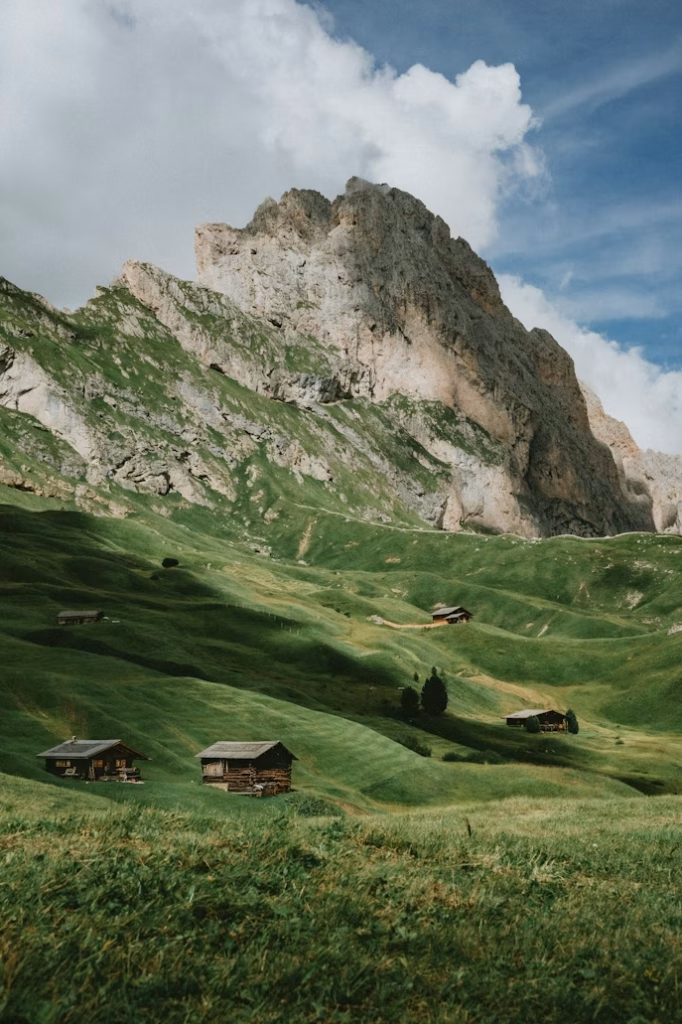
With a full week, splitting your stay between two valleys allows broader exploration without excessive daily driving. A common structure is three to four nights in Val Gardena and the remaining nights in Cortina or Alta Badia.
You can either rent a car for the entire stay or rely on train plus regional buses.
Time on the road:
- Transfer between bases by car: 2-3 hours
- Transfer by public transport: 3-5 hours
- Daily local drives: 30 minutes to 2 hours
Transport costs:
- Weekly car rental: €350-€650
- Fuel for the week: €100-€140
- Train Venice–Bolzano: €25-€40 one way
- Bus from Bolzano to valley: €7-€12
- Cable cars (per day): €25-€35
In this format, accommodation often becomes the biggest overall expense, but transport still represents a significant share if you choose full car flexibility. Avoiding August and staying in smaller villages can noticeably reduce total costs.
Scenario 3: Family Trip Without a Car
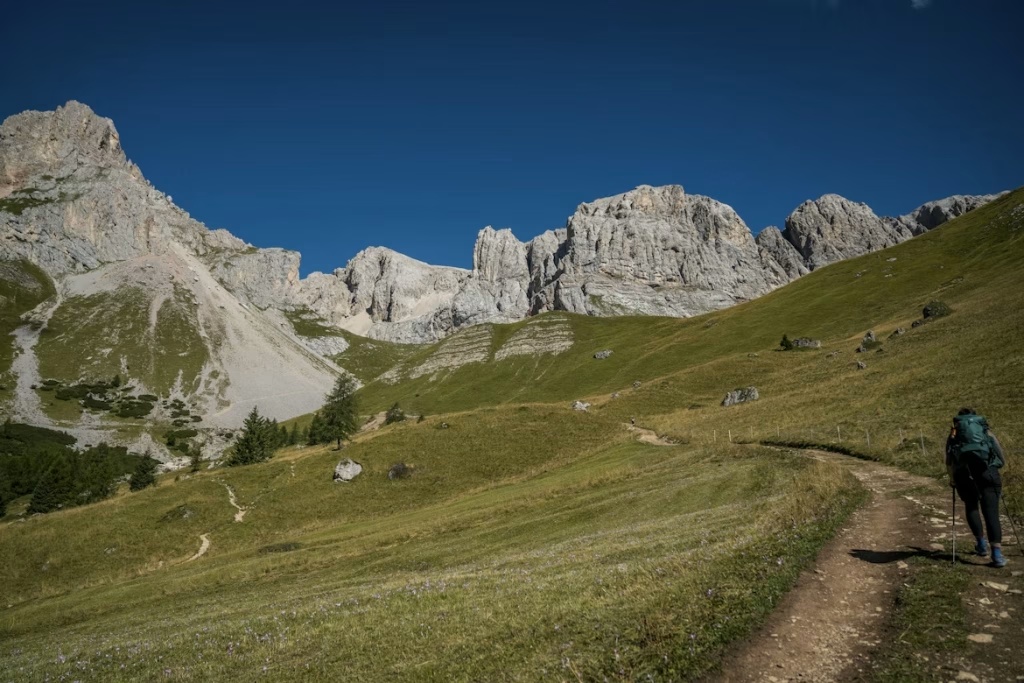
This scenario prioritizes comfort and simplicity. Choosing a single base with strong lift infrastructure such as Val Gardena or Alpe di Siusi makes daily logistics predictable and easy.
You arrive by train, transfer by regional bus, and rely on lifts and local buses for hiking access.
Time on the road:
- Venice to Bolzano by train: 3-4 hours
- Bolzano to valley by bus: 45-90 minutes
- Daily local transport: usually under 30 minutes
Transport costs:
- Train to Bolzano: €25-€45 per adult
- Bus transfer: €8-€12 per person
- Cable car day ticket: €25-€35 per adult
- Family lift use per day (4 people): €80-€120
Cable cars are the primary transport expense here. Many accommodations offer mobility cards that reduce bus costs. Staying close to lift stations minimizes daily transfers.
Conclusion
Understanding how to get around the Dolomites is less about finding one perfect option and more about matching your itinerary, time, and comfort level to the region’s geography.
If you want flexibility across multiple valleys, a rental car makes travel easier. If you prefer a slower pace with one base, public transport combined with lifts works well, especially in South Tyrol. Seasonality, mountain terrain, and transfer times shape every decision here. With realistic planning and time buffers, moving between valleys becomes part of the experience rather than a challenge.