Best Temples in Sri Lanka
Not all the best temples in Sri Lanka are equally convenient for a first trip — some of the most beautiful temples are stunning, but they can easily “eat” a full day just on the road. Let’s break down what’s truly worth seeing first, how to group the key spots in a smart way, how much time to plan for each stop, and what hours to arrive so you don’t end up stuck behind crowds.
Best Temples to See First
The most famous in the country
- Temple of the Tooth Relic (Sri Dalada Maligawa), Kandy — the island’s main Buddhist shrine; a strong, “living” experience, not just history.
- Dambulla Cave Temple — iconic caves with statues and murals; one of the most “must-see” temples on a first itinerary.
- Sigiriya + nearby temple context: the Lion Rock itself isn’t a temple in the classic sense, but it’s almost always paired with Dambulla/Polonnaruwa).
The most atmospheric
- Anuradhapura: Sri Maha Bodhi — a place of pilgrimage and quiet; the feeling of antiquity “without stage sets.”
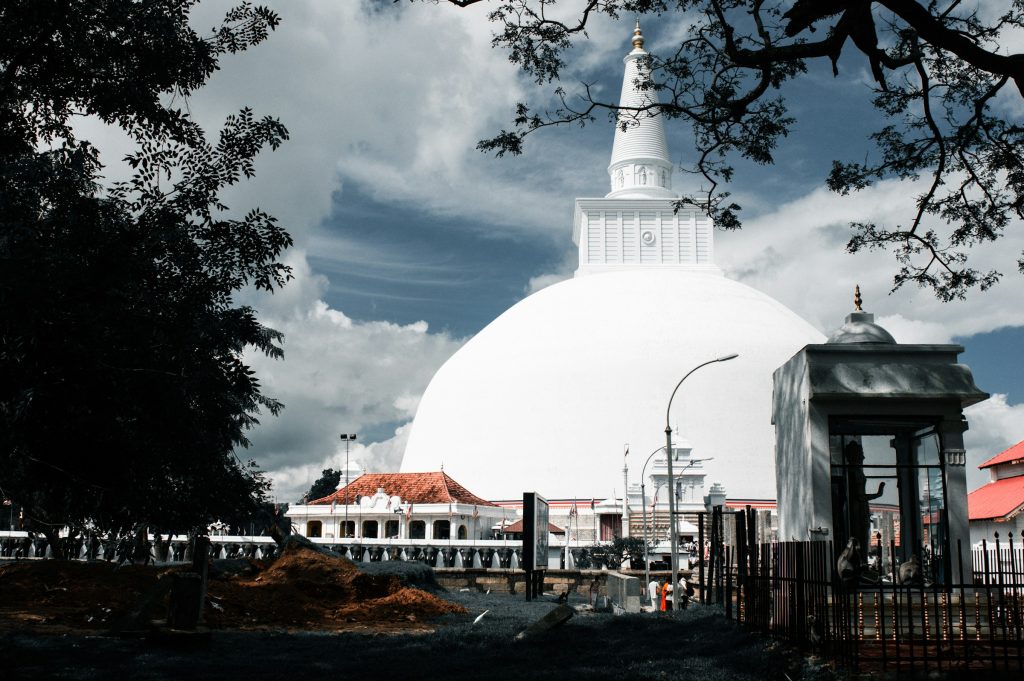
- Anuradhapura: Ruwanwelisaya — a white stupa and evening light; lots of locals, minimal “tour effect.”
- Nallur Kandaswamy Kovil, Jaffna — bright Hindu aesthetics and a different cultural layer (if you’re heading north).
The oldest
- Anuradhapura (sacred complex) — one of the island’s main ancient centers.
- Polonnaruwa: Gal Vihara — famous rock-carved Buddhas (usually visited as part of the archaeological park).
- Dambulla — a cave monastery with centuries of history.
Best if you’re short on time
The Cultural Triangle (Dambulla — Sigiriya — Polonnaruwa):
- Dambulla (2-3 hours) + Polonnaruwa / Gal Vihara (half a day) — and you’ve already “caught” the essence of Sri Lanka without rushing around.
Best in the capital / near the capital
- Colombo: Gangaramaya Temple — the most convenient “city” temple if you’re in Colombo for 1 day before departure / after arrival.
Best “outside the tourist classics”
- Nallur Kandaswamy Kovil (Jaffna) — the north, Hindu tradition, and a completely different vibe.
- Kataragama — a mix of traditions and pilgrimage energy (best approached with respect, not as a “photo safari”).
How many days you need for temples on a first trip
Ideally 3-5 days, if you weave them into your route (rather than doing a separate “temple tour”).
12 Temples in Sri Lanka
Let’s take a look at the most beautiful temples in Sri Lanka that are worth visiting on your first trip, with simple logistics and a realistic schedule in mind.
1) Gangaramaya Temple (Gangaramaya)
One of the best-known city temples — a working shrine with a “museum-like” section and a lakeside pavilion (Seema Malakaya). It’s in Colombo near Beira Lake; easy to visit on your own by taxi/tuk-tuk, and it’s often treated as a short stop “in between plans.” The best time is weekday mornings, when there are fewer visitors.
Time to plan: 45-90 minutes.
Tickets/donation: often quoted at ~300-500 LKR (you’ll also see ~400 LKR).
2) Kelaniya Raja Maha Vihara (Kelaniya)
A revered Buddhist temple about 10 km from Colombo — a good option if you’re not going to the “Cultural Triangle” but still want an important shrine near the capital. The logistics are simple: take a taxi/tuk-tuk and explore the complex without a tour. It feels best in the morning, before the heat and the groups arrive.
Time to plan: 1-2 hours.
Tickets/donation: no fixed entrance fee; donations are welcome.
Kandy & the Central Highlands
3) Temple of the Sacred Tooth Relic / Sri Dalada Maligawa (Temple of the Tooth)
The country’s main Buddhist shrine: not only tourists come here, so the place feels very “alive.” It’s in central Kandy; you can visit independently (on foot/tuk-tuk) or as part of a hill-country route. To avoid queues and crowds, people usually go early in the morning on weekdays.
Time to plan: 1-2 hours (during puja/ceremony times it can take longer).
Tickets/donation: paid entry.
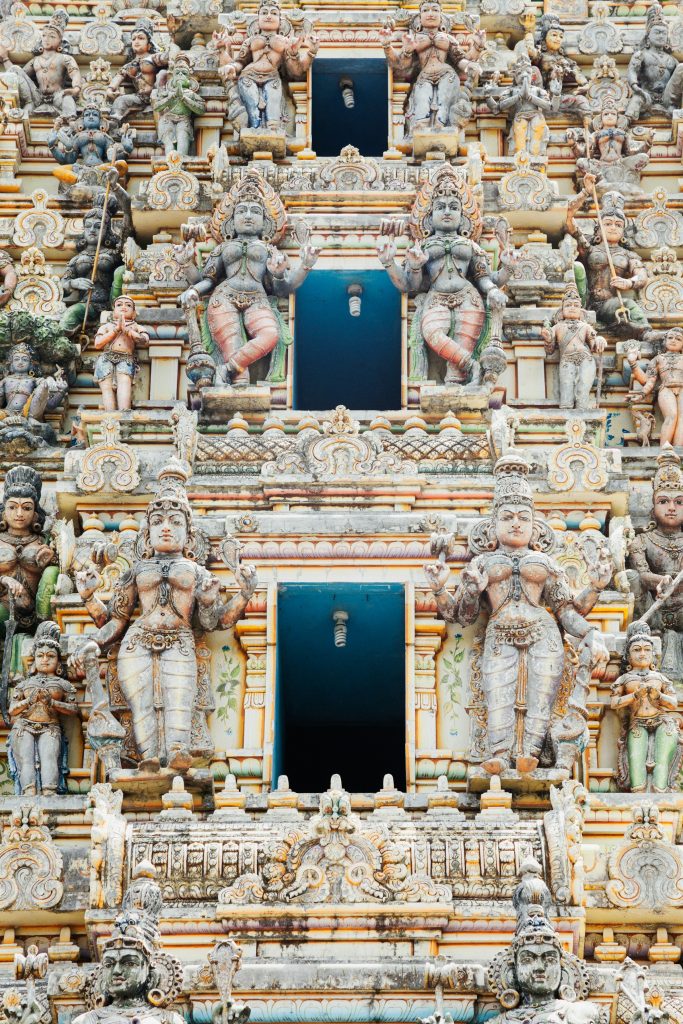
4) Seetha Amman Temple / Seetha Amman Kovil (Seetha Amman), Nuwara Eliya area
A small Hindu temple often included as a stop around Nuwara Eliya (a cultural contrast to Buddhist shrines and tea landscapes). The easiest way is by tuk-tuk/car from Nuwara Eliya; visits are usually short and don’t require complicated planning. Timing is most comfortable in the morning or closer to sunset.
Time to plan: 30-60 minutes.
Tickets/donation: no “strict” entry fee, but for puja/services they may ask ~100-200 LKR.
The Cultural Triangle (the most “high-value” region for a first trip)
5) Dambulla Cave Temple (Dambulla)
The country’s most recognizable cave temple with murals and statues; it makes sense to visit it from a base in Dambulla/Habarana/Sigiriya. Most people go independently: tuk-tuk/car + a climb up to the caves. To avoid heat and big tour groups, mornings work best.
Time to plan: 2-3 hours.
Tickets/donation: for a long time it has been ~3000 LKR — it’s best to treat this as a practical reference and confirm at the ticket desk.
6) Polonnaruwa (Archaeological Park) + Gal Vihara
Gal Vihara is “that” famous rock-carved Buddha, but you visit it as part of the larger Polonnaruwa archaeological park. Logistics: most people come from the Dambulla/Sigiriya area, and inside the park it’s easiest to move around by bicycle or tuk-tuk, because the sites are far from each other. The best window is early weekday mornings.
Time to plan: half a day (3-5 hours).
Tickets/donation: for foreigners most often $25-$30.
Anuradhapura & the North-Central Region (the island’s ancient “core”)
7) Anuradhapura — Sri Maha Bodhi
One of the key pilgrimage sites: locals come here, and the atmosphere feels very “real.” It’s in Anuradhapura; the most convenient way is to see the city’s main points as a bundle, moving by bicycle/tuk-tuk. For a calmer experience, choose morning or late afternoon.
Time to plan: 30-60 minutes for this exact spot (if you get into it, it’s easy to spend half a day across the wider complex).
Tickets/donation: Anuradhapura often uses a Sacred City ticket at ~USD 25-30.
8) Anuradhapura — Ruwanwelisaya (Ruwanwelisaya)
A huge white dagoba — one of Anuradhapura’s strongest visual symbols, especially beautiful in soft evening light. The visiting logic is the same: combine it with other Anuradhapura sites and move around by tuk-tuk/bicycle. If you want fewer people, go on weekday mornings; if you want the “scene and atmosphere,” go in the evening.
Time to plan: 45-90 minutes.
Tickets/donation: usually covered by the Sacred City ticket (USD 25-30 as a reference).
9) Mihintale
Mihintale is often described as the place where the island’s Buddhist history “began”: climbs, viewpoints, and a strong atmosphere. It’s not far from Anuradhapura; usually a separate half-day trip by tuk-tuk/car. The most comfortable option is early morning (cooler and calmer).
Time to plan: 2-4 hours.
Tickets/donation: ~1000 LKR for foreigners.
The North (if you want “outside the classics” and a different cultural layer)
10) Nallur Kandaswamy Kovil (Nallur), Jaffna
One of the country’s major Hindu kovils and a great “outside the classics” option — the north, a different culture, and a different aesthetic. You visit it from a base in Jaffna; logistics are easy, but it’s important to follow the rules inside the complex. Weekday mornings are best; festival days only if you’re ready for big crowds.
Time to plan: 1-2 hours.
Tickets/donation: usually free entry.
Dress code note: women should cover shoulders; men may be asked to remove upper clothing in certain areas.
The South / Southeast (pilgrimage energy if you’re going that way)
11) Kataragama Temple Complex (Kataragama)
A major pilgrimage complex where traditions and rituals mix — it’s more of an experience than a “photo attraction.” Logistically, it’s easy to add if you’re moving through the southeast / toward national parks; it’s best early in the morning to avoid crowds and heat. Inside, keep your behavior calm: people come here with a specific religious purpose.
Time to plan: 1-3 hours (depending on how many shrines you visit inside).
Tickets/donation: entry is usually free; donations are appropriate.
A “useful” extra (if you want one more temple without extra logistics)
12) Isurumuniya (Isurumuniya), Anuradhapura
A compact temple that’s often added for its famous carved reliefs — a good pick if you want “one more stop” without long transfers. Logistically it’s part of Anuradhapura: people drop in while moving between the main sites. Mornings are best, so you can look closely at the details without rushing.
Time to plan: 30-60 minutes.
Tickets/donation: often listed at around 1000 LKR.
Temple Routes in Sri Lanka (Suggested Temple Itineraries)
Two practical options without strict schedules or “rushing.” The logic is simple: set up bases, then visit temples in short radial trips — so you’re not changing hotels every day.
Option A: 3-4 days (if you’re passing through or sticking to one region)
Choose one “best value” region — the Cultural Triangle + (optionally) Kandy. You get the biggest impressions with the fewest transfers.
Regions covered: Cultural Triangle (Dambulla / Sigiriya / Polonnaruwa) → if you have time — Kandy.
Movement logic:
- Base: Dambulla / Habarana / Sigiriya (2-3 nights).
This is an easy hub for everything nearby: Dambulla Cave Temple (morning), then one day for Polonnaruwa + Gal Vihara (start early), and if you’re going to Sigiriya anyway — it’s the same cluster (even if it’s not a temple in the strict sense). - If you have a 4th day — move to Kandy (1 night).
Evening or morning: Temple of the Tooth, plus a short walk around the center. Next day you can continue onward (to the hills, the coast, or back to Colombo).
How many transfers + where to base yourself:
- Base 1: Dambulla / Habarana / Sigiriya — the “center of gravity,” minimal logistics.
- In practice, it’s 1 main transfer (into the Triangle base) + 1 transfer (to Kandy). Everything else is short day trips.
Temples covered:
- Dambulla Cave Temple
- Polonnaruwa + Gal Vihara
- (optional) Temple of the Tooth, Kandy
Option B: 7-10 days (a classic first-trip route)
Build the country’s “skeleton”: Colombo/nearby → Kandy → Cultural Triangle → Anuradhapura/Mihintale, then choose what fits your style: tea hills (Nuwara Eliya) or the southeast (Kataragama). The North (Jaffna/Nallur) is an extra add-on only if you’re fine with longer drives.
Regions covered: West (Colombo) → Central Highlands (Kandy) → North-Central (Dambulla / Polonnaruwa / Anuradhapura / Mihintale) → (optional) Nuwara Eliya or Kataragama → then beaches / return.
Movement logic:
- Colombo (0-1 day, no overnight or 1 night).
If you’ve just arrived or you’re flying out, keep it short: Gangaramaya and/or Kelaniya. - Kandy (1-2 nights).
Visit Temple of the Tooth at a calmer time (best: mornings/weekdays), and the city gives you a breather before the next drives. - Base: Dambulla / Habarana / Sigiriya (2-3 nights).
One day — Dambulla Cave Temple; another — Polonnaruwa + Gal Vihara (half-day to full day). - Anuradhapura (1-2 nights) + a side trip to Mihintale.
This is where the ancient sacred sites fit best: Sri Maha Bodhi, Ruwanwelisaya, plus a quick extra stop at Isurumuniya. Then a separate slot for Mihintale (half day). - Optional fork (2-3 days):
- Nuwara Eliya / tea hills (1-2 nights): add Seetha Amman Temple as a compact Hindu contrast on the way / nearby.
- Kataragama (1 night): if you’re heading through the southeast / toward safari areas, include Kataragama Temple Complex as a pilgrimage-style experience.
- Finish: back to the coast or to Colombo — without turning it into a “temple marathon.”
How many transfers + where to base yourself:
- Ideally keep 3 bases: Kandy → Dambulla/Habarana → Anuradhapura.
- That’s roughly 3-4 bigger drives for the whole stretch; everything else is short half-day outings.
If you want something “outside the tourist classics” without overload:
- Add Nallur (Jaffna) only if you can give the north its own block (usually one more base + one extra long transfer). At that point, the route becomes 10+ days with a northern add-on.
Temple Etiquette in Sri Lanka (Temple Etiquette)
In Sri Lanka, temples aren’t “decorations” — they’re active places of prayer. If you keep a few basics in mind (clothes, shoes, quiet, photos), the visit stays calm — for you and for the people around you.
Dress code
In most Buddhist and Hindu temples, modest clothing is expected. It’s not about being “strict,” it’s about respect.
- Cover shoulders and knees. Sleeveless tops, short shorts/skirts are a bad idea (it’s better to throw on a shirt/shawl and choose a knee-length option).
- Light “savers” in your daypack: a thin long-sleeve shirt, a scarf/pashmina, lightweight long pants — they fix the issue in 10 seconds.
- Hats: in Buddhist temples you’re usually asked to take them off; in Hindu sites rules can differ — follow signs and staff requests.
- A separate note for Hindu kovils (especially in the north): in some areas men may be asked to remove their shirt. If you’re unsure, just check with security/temple staff using a quick gesture.
How to behave inside (quiet, don’t interrupt prayer)
The key is not to break someone else’s prayer with “tourist mode.”
- Speak more quietly than you normally would: inside and near shrines — no loud conversations or phone calls.
- Don’t stand between people and what they’re worshipping. If someone is praying, pass to the side and don’t block the view.
- No exaggerated poses or “staged” moments. The more natural you act, the fewer problems you’ll have.
- Respect lines and rituals. If you see a flow of people with offerings, don’t cut into it.
Shoes and “where to put your things”
In most temples you remove your shoes — and in the heat, that can catch people off guard.
- You’ll almost always need to take your shoes off before entering sacred areas/halls.
- Socks are a simple hack. Stone can get very hot, and after rain it can be slippery.
- Shoes are left at the entrance (sometimes on shelves/with a storage desk, sometimes just in a line). In the busiest places, it helps to have a plastic bag so you can carry your shoes with you if that’s allowed.
Photo/video: where it’s usually OK — and where it’s better not to
The basic rule: outside is often fine, inside needs caution, and you always follow the signs.
- Outside, in courtyards, and on the approach photos are usually allowed.
- Inside halls/caves filming may be forbidden (or allowed only without flash).
- Don’t take selfies/“hugging the shrine” photos, and don’t pose next to people who are praying.
- Flash and bright lights are almost always a “no” (they disturb people and can damage murals / ruin the atmosphere).
- If you see “No photo / No video,” don’t argue — rules are enforced strictly.
If you’re visiting with kids: 2-3 quick tips
Temples can work great with kids if you set expectations.
- Keep it short: 30-60 minutes “enjoyably” is better than 2 hours through fatigue.
- Hot floors/shoes: socks or light closed footwear + water are a must.
- Explain “quiet mode” in advance: running and loud play stay outside the sacred areas.
Practical Tips for Visiting Temples in Sri Lanka
How to avoid crowds (morning / weekdays / off-peak months)
The most reliable rule is to arrive at opening time. The difference between “8 a.m. vs 10 a.m.” at popular places like Kandy and Dambulla is usually huge: tour groups roll in later, and the heat makes everything feel even more crowded. The second simple filter is weekdays — the flow is noticeably calmer, and you actually see the temple, not a wall of tourist backs.
What genuinely helps:
- Morning is almost always better: cooler, quieter, fewer queues.
- Weekdays beat weekends (especially in pilgrimage-heavy places).
- If you’re traveling in high season, schedule temples for the first half of the day, and leave beaches/transfers for the afternoon.
Weather and footwear (heat, rain, slippery steps)
Temple areas have a lot of stone: it can be either scorching hot or slick after rain. And yes — you often have to take your shoes off, so it’s worth being prepared in advance. Practical tips that actually save the day:
- Socks are a small thing that solves a lot: protection from hot stone and from wet walkways (this is especially relevant in Kandy, where shoes are left for storage before entering).
- Bring water, and don’t plan long temple walks in peak heat (roughly 11:00-15:00 usually feels the toughest).
- After rain, steps/tiles can be very slippery — walk more slowly, especially where there’s a climb (Dambulla, Mihintale).
Accessibility (stairs, long walks)
Some top spots are physically demanding — it’s worth factoring this in ahead of time so you don’t ruin the day.
- Dambulla and Mihintale involve climbs and stairs: leave extra time and plan your visit in the morning.
- Polonnaruwa isn’t “one temple by the entrance” — it’s a large area: a bicycle or tuk-tuk is the comfortable way to do it, otherwise you’ll just get tired and start skipping the best parts.
- If you’re traveling with a child or have mobility limits: choose more “compact” sites (Gangaramaya in Colombo, the Temple of the Tooth in Kandy) and don’t stack two climb-heavy places into one day.
Common tourist “scams” near popular places (very relevant in Sri Lanka)
Around major sights you’ll usually see not “dangerous” schemes, but small and annoying ones: overpaying, pushed services, “mandatory” payments that aren’t actually mandatory.
What comes up most often:
1) “Fake guides” and pushed tours at the entrance
Someone may approach you as a “guide/staff member” and confidently offer help for an inflated price, especially near famous sites. It’s better to arrange a guide in advance, or use only those who are clearly official (badge/recognized stand), or simply visit on your own.
2) “Donation is mandatory” / “paid entry where it isn’t needed”
Sometimes people try to present a donation as a “mandatory” payment or inflate small fees (for example, shoe storage). The basic rule: donations are voluntary, and any fixed fee is best confirmed with the ticket desk/staff — not a random person “from the street.”
3) “Back entrance / no-ticket shortcut” (especially at archaeological sites)
A classic pitch at ancient cities: a driver/middleman offers a “cheaper way in” through an “unofficial entrance.” In reality, it’s a risk of paying into someone’s pocket and still not seeing the full site — or running into trouble at checks. Polonnaruwa has had these stories for years; it’s simpler to buy an official ticket.
4) “No ticket — you don’t need a ticket” (Anuradhapura)
Because tickets aren’t checked at every single shrine, some people will tell tourists they can skip the overall ticket. That’s either a mistake or a commission scheme. The safer approach: buy the ticket at the official counter and ignore the rest.
Mini checklist to avoid getting caught:
- Ticket desk first, then any “helpers.”
- Agree on the price before the ride (tuk-tuk/guide).
- Carry small cash, so you don’t end up arguing about change and “mandatory fees.”
Before You Go
If you’re visiting Sri Lanka for the first time, don’t try to “see all the best temples in Sri Lanka” — it quickly turns into constant transfers and exhaustion. A simpler approach works better: pick 1-2 clusters and build your route around them. For most travelers, the best starting point is the Cultural Triangle (Dambulla + Polonnaruwa), with Kandy or Anuradhapura added if you have extra time. And if you want a “different layer” of the country, add Hindu sites — Seetha Amman in the hills, or Nallur in the north (as a separate add-on).
Most importantly, temple experiences here depend less on the list and more on how you do it. Come early and on weekdays, allow time for climbs and heat, keep socks and water handy, respect the dress code and quiet rules and even the most beautiful temples in Sri Lanka will feel less like a tourist stop and more like a real place of power.