Málaga: Where to Stay, How to Understand the City, and Not Dissolve Only into the Beaches
Málaga doesn’t try to convince you that it’s the center of the world. It simply opens a window to the sea, lets the sunshine create the atmosphere, and moves at its own relaxed pace. At first glance, it’s easy to think the beach is the main attraction. But look a little closer and you’ll discover so much more: Roman ruins, a Moorish fortress overlooking the city, thoughtful museums, lively bars serving freshly grilled sardines, and neighbourhoods where you hear everyday Spanish instead of tourist chatter.
That’s why in Málaga it’s not only about what you plan to see, but also where you choose to stay. A neighbourhood here is more than just an address on the map. It shapes the rhythm of your mornings, how far you are from the sea, whether you fall asleep to the hum of late-night bars or wake up to quiet residential streets, whether you stroll home along the promenade or take a bus through local districts.
The city may be compact, but it’s full of contrasts. The historic centre and quiet fishing areas are only a few kilometres apart. A university campus and large residential complexes are connected within half an hour by public transport. And if you’re visiting for just a few days, choosing the right neighbourhood can truly define your entire experience.
For up-to-date information about districts, attractions, and local events, you can explore the official tourism website, which offers practical guidance to help you plan your stay with confidence.
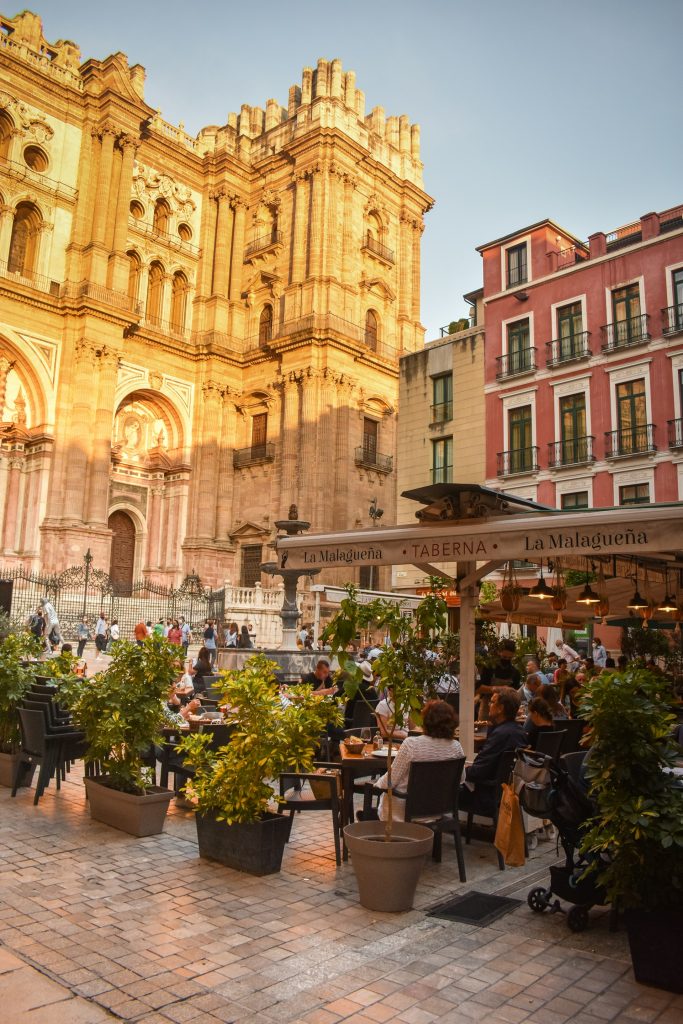
How Málaga Is Organised: Sea, City centre and Transport
Málaga is easy to understand once you see how naturally it’s divided between the sea, the historic heart, and its transport connections.
The historic centre is compact and perfect for exploring on foot. Here you’ll find landmarks like Catedral de Málaga, the Roman Theatre of Málaga, the Alcazaba of Málaga, Castillo de Gibralfaro and the Museo Picasso Málaga. Within just a few streets, you’re surrounded by lively squares, tapas bars, and museums. If it’s your first visit, this area will naturally become your anchor point. Most of your days will likely begin and end here, even if you spend the afternoon by the sea or exploring other neighbourhoods.
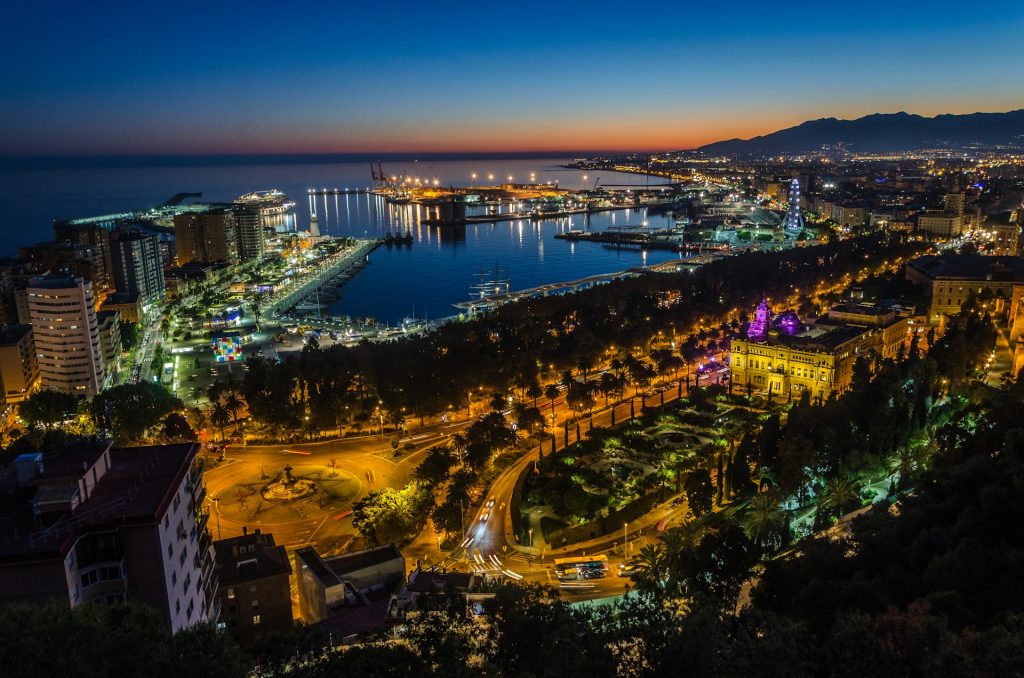
Closer to the water, the port and Muelle Uno waterfront offer a completely different feel. It’s open, airy, and full of light, with views of yachts and cruise ships. The streets are wider, the breeze comes straight from the sea, and the restaurants feel more contemporary. This is where you come for slow evening walks and golden sunsets, when the city seems to gently unfold toward the horizon.
To the west of the centre is Málaga María Zambrano railway station, the main rail hub. From here, trains connect you to cities like Seville, Córdoba and Madrid, as well as along the Costa del Sol via the Cercanías C1 and C2 lines. If you’re planning day trips or arriving from another Andalusian city, this station will likely play an important role. You can check schedules and tickets directly on the official Renfe website.
The Málaga-Costa del Sol Airport is located about 8 km from the city centre. It’s easy to reach by Cercanías train or by the Line A bus operated by EMT Málaga. Buses run frequently, and the journey usually takes between 15 and 25 minutes.
Once you understand this simple geography: the historic core, the open seafront, and the transport hubs. It becomes much easier to choose where to stay, whether you prefer to be in the middle of the action, by the beach, or close to convenient connections for exploring further afield.
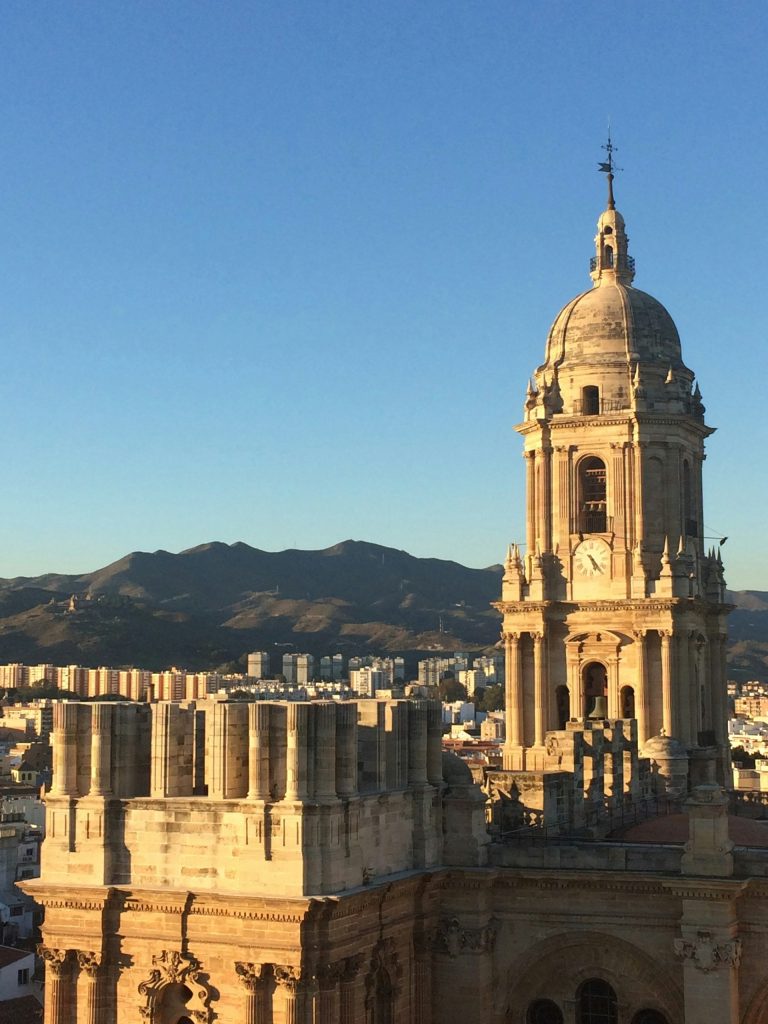
Centro Histórico
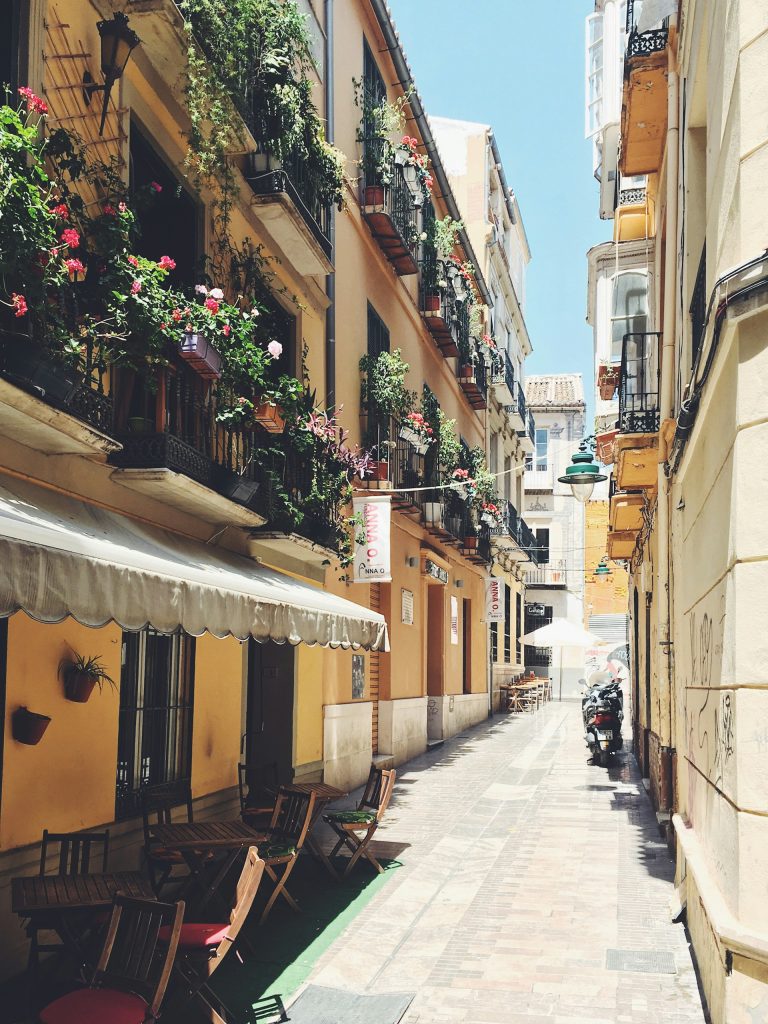
The historic centre is the heart of Málaga. This is where the main landmarks, museums, restaurants, and nightlife are concentrated. It is the most “touristic,” but also the most vibrant part of the city.
Who it suits
- First visitors
- Atmosphere lovers
- Short time stays
- Would walk a lot
Pros
- Everything nearby
- Museums and historical buildings
- Restaurants, tapas
- Nightlife
- Pedestrian streets
Cons
- Noisy because of nightlife
- Prices are high
- Parking is limited
What is nearby
- Catedral de Málaga
- Alcazaba
- Roman Theatre
- Museo Picasso
- Plaza de la Merced
Accommodation
- Boutique hotels
- Apartments
- Guesthouses
Who it is convenient for
- Couples
- Short weekend stays
- Travellers without a car
Pay attention to
- Air conditioning
- Noise from bars
- Elevator in the building
- Windows facing courtyard
Best choice
A small hotel or apartment in the central part of the district.
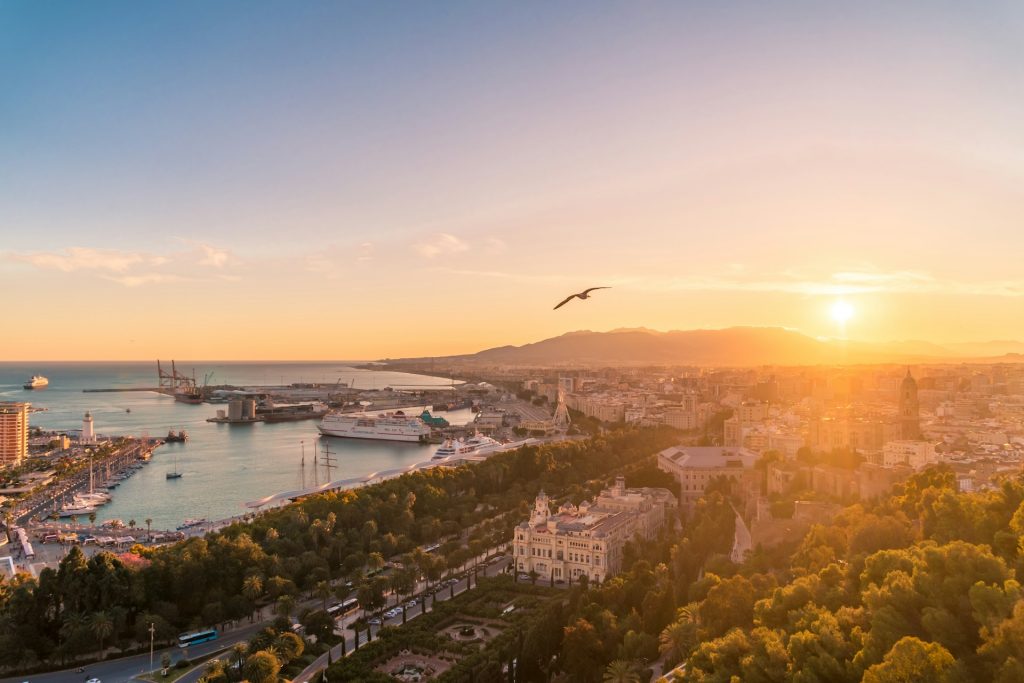
Soho
Soho is a modern, creative, and slightly alternative neighbourhood near the port and the city center. Here you will find street art, designer shops, galleries, and a calmer atmosphere than in the old town. The district is compact, convenient, and well connected to the train station.
Who it suits
- Young couples
- Creative travellers
- Modern lifestyle lovers
- Travellers without a car
Pros
- Close to the centre
- Near the port
- Modern cafés
- Fewer tourists
- Close to the station
Cons
- Less historical atmosphere
- Some busy traffic areas
- Night bars
What is nearby
- Muelle Uno
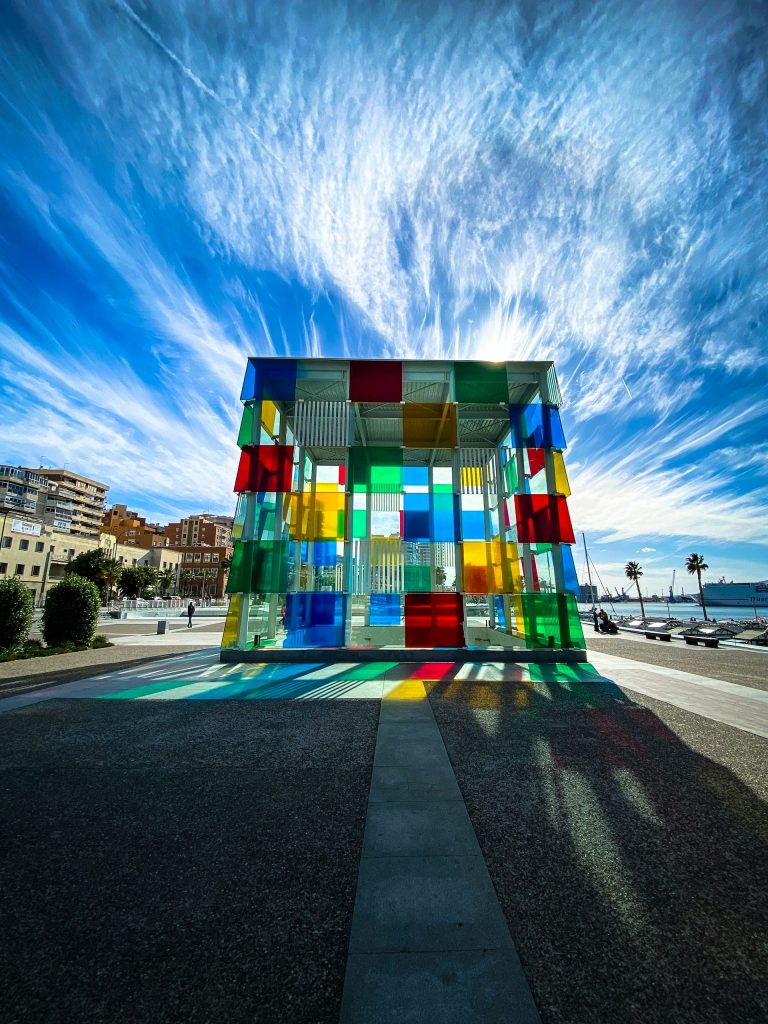
- Centre Pompidou Málaga
- Parque de Málaga
- Centro Histórico
- María Zambrano station
Accommodation
- Apartments
- Design hotels
- Modern studios
Who it is convenient for
- Digital nomads
- Short stays
- Travellers without a car
Pay attention to
- Road noise
- Air conditioning
- Distance to the beach
- Building condition
Best choice
Modern apartments or a small design hotel.
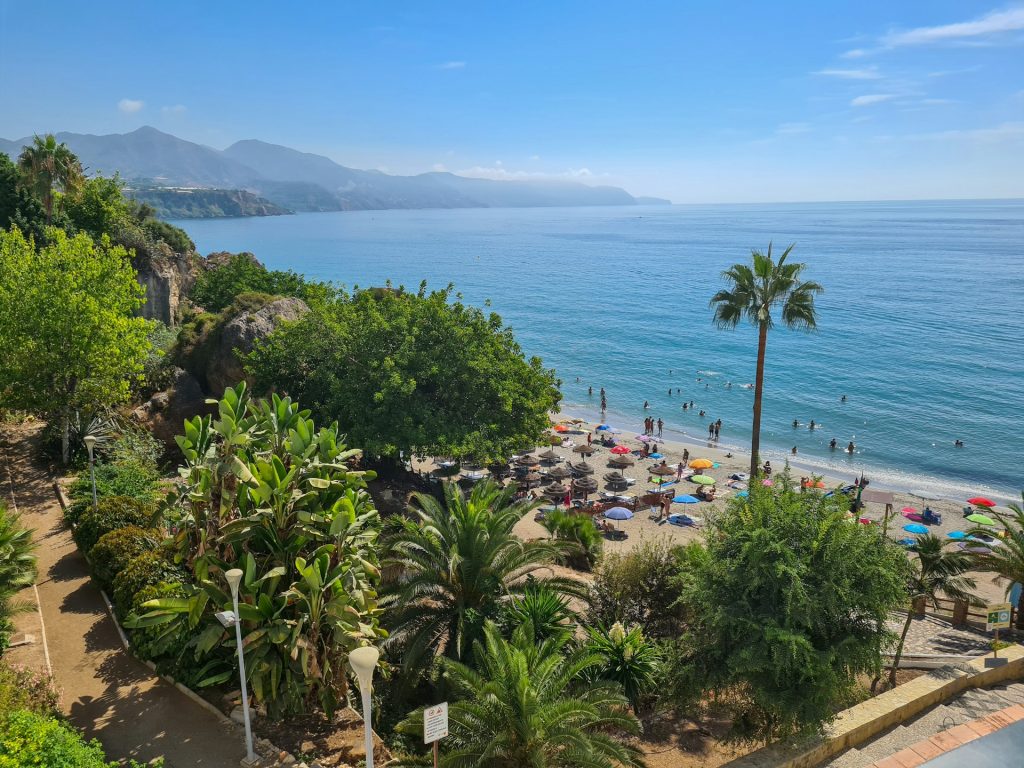
La Malagueta
La Malagueta is a combination of beach proximity and closeness to the centre. The district is located just beyond the port, with a long promenade, palm trees, and views of Castillo de Gibralfaro. There is less tourist chaos here, and more space and light.
Who it suits
- Beach holidays
- Families
- Calm travellers
- Couple days to one week stays
Pros
- Beach nearby
- 10–15 min to centre
- Spacious promenade
- Less nightlife noise
- Sea views
Cons
- Less historic atmosphere
- Tourist pricing
- Difficult parking
What is nearby
- Playa La Malagueta
- Castillo de Gibralfaro
- Alcazaba
- Muelle Uno
- Centro Histórico
Accommodation
- Sea-view apartments
- Seafront hotels
- Family flats
Most common here
- Apartments
- Mid-range hotels
Who it is convenient for
- Families
- Travellers with children
- Sea lovers
Pay attention to
- Sea view
- Noise from promenade
- Air conditioning
- Elevator
Best choice
Apartments near the beach or a hotel with sea views.
El Palo
El Palo is a former fishing district in eastern Málaga. The rhythm here is different: fewer tourists, more locals, small houses, boats, and seafood restaurants directly on the beach. The atmosphere is simpler, more authentic, without gloss.
Who it suits
- Longer stays
- Quiet travel lovers
- Local experience seekers
- Beach without crowds
Pros
- Authentic atmosphere
- Seafood restaurants
- Quiet beaches
- Fewer tourists
- Lower prices
Cons
- Far from the city centre
- Transport needed
- Fewer landmarks
What is nearby
- Playa El Palo
- Pedregalejo
- Paseo Marítimo
- Local chiringuitos
- Bus connections to centre
Accommodation
- Apartments
- Local flats
- Small guesthouses
Most common here
- Apartments
- Weekly rentals
Who it is convenient for
- Families
- Quiet holidays
- Slow travel
Pay attention to
- Travel time to centre
- Bus stops
- Air conditioning
- Building condition
Best choice
Apartments near the sea with good transport access.
Pedregalejo
Pedregalejo is a neighbouring district to El Palo, but slightly more lively and more “youthful.” It has a long promenade, bars with sea views, evening walks, and a relaxed resort atmosphere. The district is popular among local students and those who want to combine beach life and social life.
Who it suits
- Young travellers
- Beach and bar lovers
- 4–5 day trips
- Summer holidays
Pros
- Beach nearby
- Lively promenade
- Many chiringuitos
- Fewer tourists than centre
- Sea sunsets
Cons
- Far from centre
- Bus required
- Evening noise
What is nearby
- Playa Pedregalejo
- El Palo
- Paseo Marítimo
- Seafood restaurants
- Bus routes
Accommodation
- Apartments
- Flat rentals
- Small hotels
Most common here
- Apartments
- Weekly rentals
Who it is convenient for
- Couples
- Friends
- Beach holidays
What to pay attention to
- Bar noise
- Distance to transport
- Air conditioning
- Window views
Best format
Apartments near the promenade or a small hotel with a terrace.
Huelin
Huelin is a residential district west of the centre, closer to the train station and port area. It has a beach, a park, and local life without a tourist façade. The atmosphere is simple, working-class, and more “real” than postcard-perfect areas.
Who it suits
- Budget travel
- Quiet neighbourhood stays
- 4–5 day trips
- Travellers avoiding tourist crowds
Pros
- Beach nearby
- Lower prices
- Close to station
- Parque de Huelin
- Local cafés
Cons
- Less historic atmosphere
- Simpler architecture
- Farther from old centre
What is nearby
- Playa de Huelin
- Parque de Huelin
- María Zambrano station
- Vialia shopping centre
Accommodation
- Apartments
- Budget hotels
- Local flats
Who it is convenient for
- Families
- Travellers with frequent train trips
- Car travellers
Pay attention to
- Distance to beach
- Road noise
- Metro nearby
- Air conditioning
Best format
Apartments near the beach or metro.
Areas that are often inconvenient for a first visit
Málaga is generally safe, welcoming, and easy to navigate. However, if you’re visiting for the first time and only have a few days, some specific areas may feel less practical. For a short trip, it’s usually better to minimize commuting time and stay close to the main attractions, the sea, or convenient transport links.
Campanillas
Located on the western edge of the city, Campanillas feels more like a separate small town than part of central Málaga. While it’s quiet and residential, getting to the historic centre can take 30–40 minutes or more by public transport. There are few landmarks nearby, and you’ll likely spend a significant part of your day commuting.
Better for: long stays, travellers with a car, or those visiting the nearby technology park.
Puerto de la Torre
Puerto de la Torre is a calm residential district popular with locals and families. It’s safe and authentic, but quite far from both the beach and the historic centre. Public transport connections are more limited, especially in the evenings.
Better for: slow travel, visiting friends or family, longer-term stays.
Carretera de Cádiz (inland sections)
The coastal parts of Carretera de Cádiz are lively and well connected, but the more inland residential zones can feel less atmospheric for a first visit. You may find yourself surrounded by apartment blocks with fewer sights within walking distance.
Better for: budget accommodation, beach-focused stays (if close to the coast).
Teatinos
Home to the university campus, Teatinos has youthful energy and modern residential buildings. However, it lacks historical charm and seaside views. While metro access makes it manageable, it doesn’t offer the Andalusian atmosphere many first-time visitors expect.
Better for: students, remote workers, longer stays.
If this is your first time in Málaga, staying closer to the historic centre, the port, or the beach areas like La Malagueta will likely make your experience smoother and more memorable.
How to Choose Accommodation in Málaga
If you’re visiting for 2–3 days, staying in the historic centre or near La Malagueta is usually the most convenient. You’ll spend less time on transport and more time wandering the streets, enjoying cafés, and soaking up the city’s atmosphere.
For trips of 4–7 days, neighbourhoods like Pedregalejo, El Palo, or Huelin are great options. They let you enjoy both the beach and the city without wasting time or money on long commutes.
A few things to check before booking:
- Air conditioning (summer can get very hot).
- Actual travel time to the centre or nearest metro station.
- Reviews mentioning noise levels.
- Floor level and whether there’s an elevator.
- Parking, if you’re travelling by car.
Málaga is a city of sunshine, but also of stone buildings that heat up quickly, air conditioning is not a luxury here, it’s a must.
One-day route: history and sea
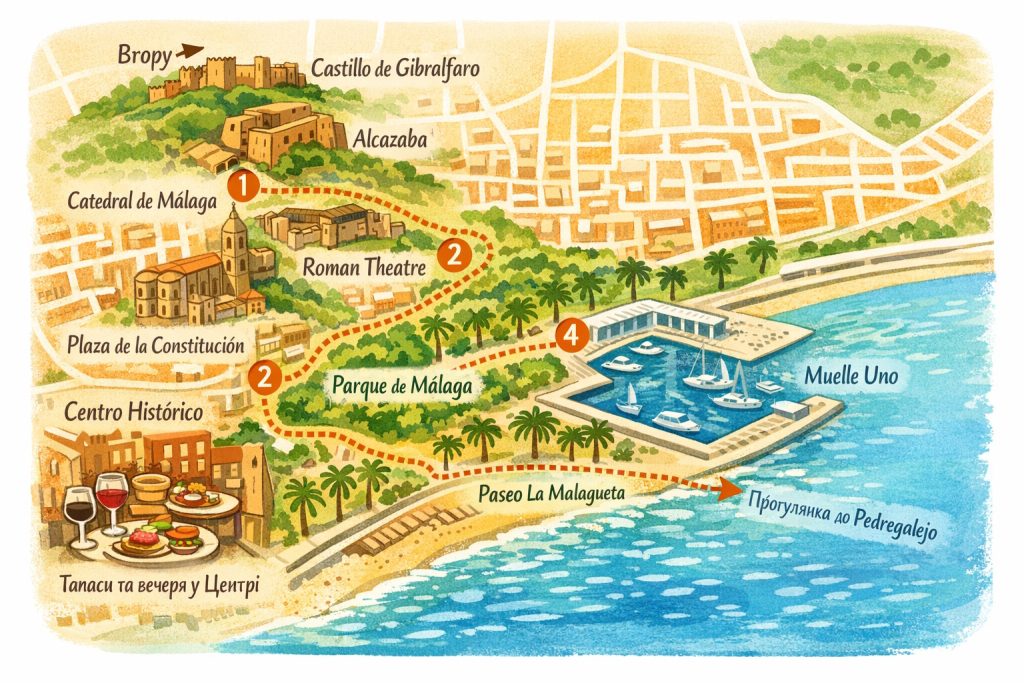
Start your morning in Centro Histórico, start in Plaza de la Constitución, then continue to Catedral de Málaga. Walk to the Roman Theatre and climb up to Alcazaba. If you still have energy, continue further up to Castillo de Gibralfaro for panoramic views of the city and port.
After lunch, walk down to Parque de Málaga and continue toward the port area of Muelle Uno. This is a natural transition from history to the sea.
Then continue along the promenade of La Malagueta, or further to Pedregalejo if you want more space and fewer crowds.
It is best to finish the evening in the centre: tapas, a glass of wine, and narrow streets lit by warm streetlights.
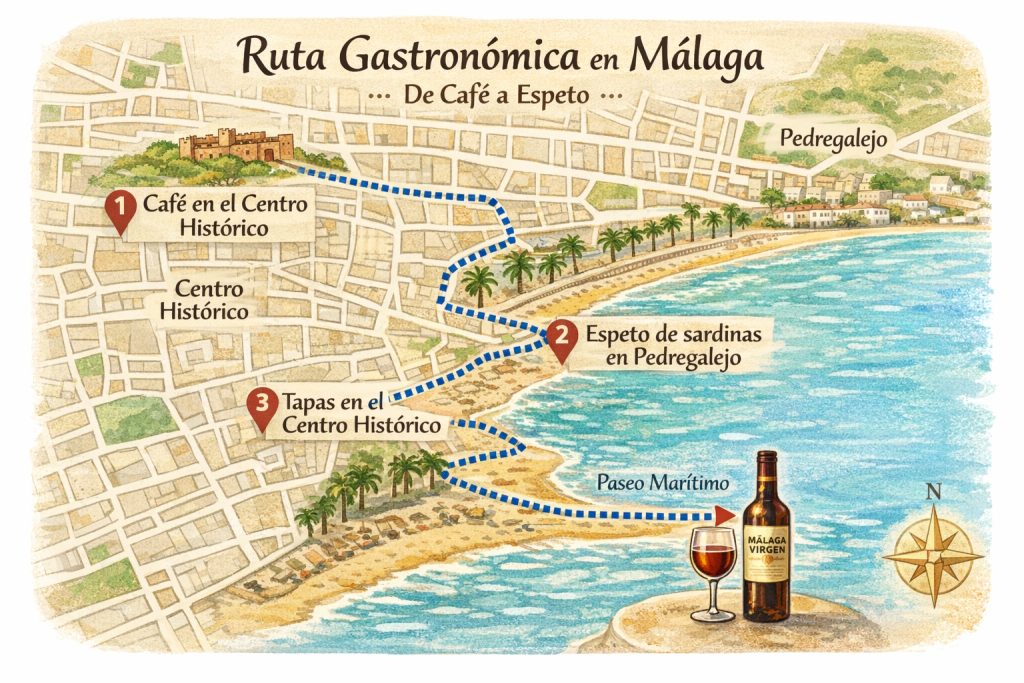
Gastronomic route: from coffee to sardines
Start with coffee in the centre, a traditional café con leche in a local bar.
For lunch, try espeto de sardines in a seaside chiringuito (Pedregalejo or El Palo are the best areas).
Take an afternoon break with tinto de verano or fresh juice on the promenade.
In the evening, enjoy tapas in Centro Histórico: jamón ibérico, boquerones, tortilla española.
Finish with a glass of local sweet wine Málaga Virgen.
Don’t try to order everything at once! In Andalusia rhythm matters: short stops, light dishes, plenty of sunlight, and slow conversations.
Let Málaga Unfold at Its Own Pace
Málaga is far more than just a beach destination or a postcard-perfect old town. It’s a city where Moorish history meets contemporary waterfront design, where student life blends with quiet fishing traditions, and where every neighbourhood shapes a completely different kind of stay.
When you choose your area thoughtfully, your trip begins to feel more personal. One morning might start with coffee in a sunlit square in the historic centre, while another ends with a peaceful walk by the sea, just a few kilometres away from the busiest tourist streets. The beauty of Málaga lies in these subtle transitions: from culture to coastline, from lively tapas bars to calm residential corners.
This is not a city that demands a rushed checklist. It rewards those who slow down, who notice the light changing over the port, who linger a little longer at dinner, who allow space for spontaneous detours. Málaga is best experienced not by trying to see everything, but by letting yourself settle into its rhythm.
Choose your neighbourhood well, give yourself time, and the city will open up naturally – warm, layered, and unforgettable.